

Blog
How to Choose a Rechargeable Portable PA Speaker: 7 Specs That Decide Real-World Performance

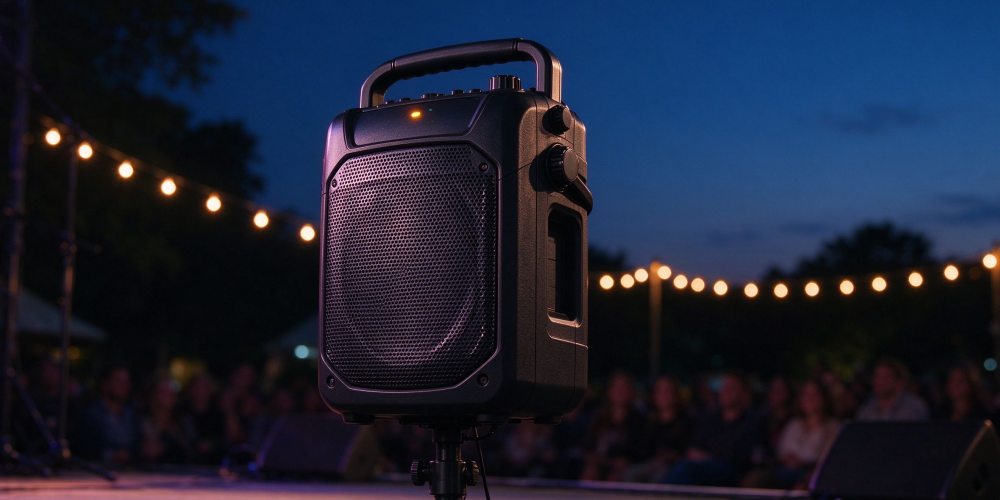
The market for portable speakers is crowded. But most of them are built for the living room — and the living room has a power outlet. Choosing a speaker for real performance means looking past the marketing watts and asking what happens when you set up on a noisy street, run for six hours, or pack it in and out of a van every day.
Here are the seven specifications that separate a serious rechargeable PA speaker from a glorified Bluetooth box.
1. Sound Pressure Output — Will It Cut Through the Noise?
Wattage figures are a marketing game; sound pressure level (SPL) is the reality. For outdoor performance, you need powerful sound pressure output that stays clean at distance — enough headroom to punch through traffic, wind and crowd chatter without distorting at the loudest moments.
2. Battery Life — The Freedom Metric
A rechargeable speaker is only as good as its battery. Consider your real usage: a busker’s afternoon, a four-hour band set, a full-day event. Look for long-lasting battery life that comfortably covers a full session, and pay attention to charging time — in real life, the gap between sets is shorter than you think.
3. Portability & Form Factor — Will You Actually Bring It?
A speaker that stays in the van is a speaker that doesn’t exist. Compact form factor, sensible weight, ergonomic handles and wheel options for larger units determine whether the gear actually gets used. Map your transport: if you carry it by hand or on a bike, every kilogram counts.
4. Acoustic Tuning & Sound Reproduction — Is the Voice Honest?
Raw volume means nothing if the sound is muddy. Quality speakers use optimized acoustic tuning so vocals stay clear and instruments reproduce naturally across the frequency range. Listen specifically for vocal intelligibility — it’s the hardest job for any PA and the most important for live performance.
5. Multi-Functionality — One Box for Every Input
The best portable systems replace a stack of gear. Look for multiple input channels (mic, guitar, line), Bluetooth streaming and practical extras like recording outputs or auxiliary power. The right connections let a single speaker handle guitar + vocals + backing tracks — a full solo rig in one unit.
6. Structural Design & Durability — Built for the Outdoors
Street performance is brutal on gear: rain, dust, heat, bumps and the occasional knock from a passing crowd. Optimized structural design means proper bracing, protective corners, secure components and sensible port placement that survive years of real-world abuse — not just the trip from the box to the shelf.
7. Quality Control & After-Sales Support — Consistency You Can Rely On
Professional-grade consistency comes from the factory, not the brochure. Manufacturers that enforce strict quality control throughout production deliver unit after unit that sounds the same — essential when you’re expanding, replacing or servicing a setup. And when something does need attention, reliable after-sales service keeps the show running instead of waiting on parts.
The Bottom Line
A serious rechargeable PA speaker is a bundle of compromises done right: loud enough for the street, light enough to carry, honest enough to trust, tough enough to last. Compare any candidate on these seven points — and measure them against same-spec alternatives on portability, acoustic performance, sound reproduction and overall durability. The winner is the speaker you’ll still be performing with in five years.
Need help matching a speaker to your setup? Get in touch — our team can recommend a Musiccube or Massfun system built for the way you actually perform.